
Getting someone out: $80–$180
Standard Sydney call-out for after-hours attendance. Ask before booking, not after the invoice.
The first thing that happens is not a booking. It is a plumber telling you what to shut off right now, because the minutes before anyone arrives are where most of the damage is either done or prevented.
The honest test is whether it is still getting worse while you wait. Water, waste or gas going somewhere it should not, and not stopping. A burst pipe, sewage backing up into the shower, a hot water tank emptying through the ceiling, or any smell of gas: those are emergencies, and waiting until morning multiplies the damage bill.
Then there is the category people apologise for calling about: the only toilet in the house blocked, no hot water with a newborn, a drain backing up the night before an inspection. Call anyway. An after-hours call here reaches a plumber, not a promise of one tomorrow.
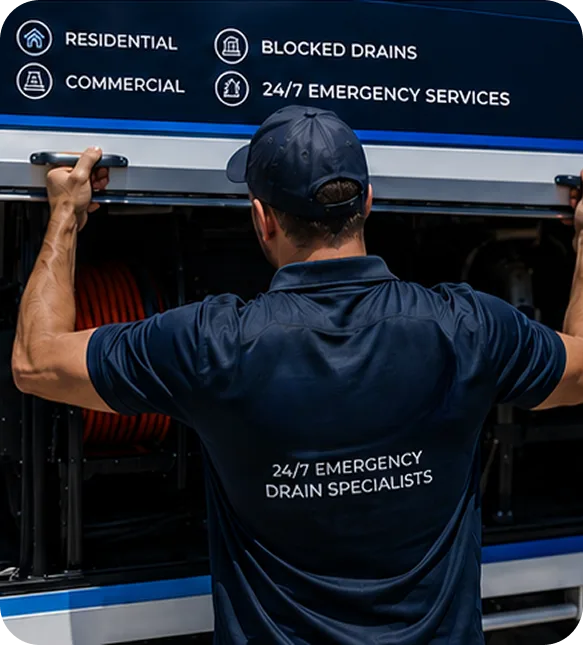
Some homes of this vintage still run original galvanised steel water pipe. It corrodes from the inside, so the warning signs arrive gradually: pressure fading over years, rusty water after a holiday, hot flow noticeably worse than cold.
The emergency version is a section finally giving way. Isolating at the meter is the immediate answer, and the longer conversation is whether the run is worth repairing or replacing, which is a daylight decision.
A drain on a slope moves water fast, and fast is not always good. Waste can outrun the liquid carrying it on a steep run and settle at the first flat section, building up at exactly the same spot each time.
With Berowra Valley reserve wrapping the suburb, eucalypt roots probe Westleigh’s ageing pipe joints from every direction in search of water.
The tell is a blockage that recurs at the same interval in the same place. That is a gradient problem, not a usage problem, and no amount of careful flushing fixes it — the answer is to see the profile of the line and correct the section that is wrong.
Most homes around Westleigh have an overflow gully outside — a low grate, often near the back step, that nobody thinks about until it matters. It is deliberately set below the lowest fixture indoors so that when the line blocks, it spills into the garden instead of through your floor.
Storms shed water off the plateau fast toward Berowra Creek, dragging leaf litter and silt into stormwater pits and overloading older lines.
So a gully running in heavy rain is not a fault. It is the system doing its job and telling you the line downstream of it has stopped taking water. That is the moment to call, not after it reaches the hallway.
If this is the second or third time, the useful thing you can do at 2am is write down the date. Two or three of them tell a plumber more than any description, because the interval reveals how fast the obstruction rebuilds.
A shortening gap between call-outs is the signal that jetting has stopped being the answer. That is a daylight conversation, not a tonight one, but tonight is when the evidence gets recorded.
Almost the whole suburb was plumbed within a decade or two, so its original drains are all reaching end-of-life together, joints perished, sections settled.
Homes of this era were generally plumbed in copper with clay drainage, both laid well and both now decades past installation. Copper itself ages slowly; what fails is what joins it, and the flexible hoses added under sinks and vanities in later decades.
A failed flexi is the classic unattended flood, and it is also the cheapest thing in the house to have replaced before it happens. Worth doing on a quiet Saturday rather than meeting us on a wet one.
A yard that floods in every serious downpour is a different problem from one that flooded once in a freak storm. The first is a blocked or undersized line and it will keep happening; the second is weather.
Telling them apart takes a camera on a dry day, not a guess in the rain. If it has happened twice, book the inspection between storms — clearing a surcharging pit at the height of it costs more and tells you less.
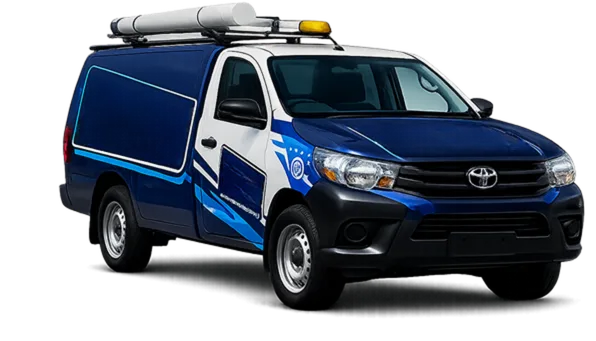
An emergency fix that waits for a supplier is not an emergency fix. The vans carry the failure parts this work actually produces — pipe and fittings across the common sizes and eras, valves, flexible hoses, tempering and relief valves, drain machines and a camera.
It is why most call-outs finish on the first visit rather than being made safe and revisited. Where a part genuinely is not on board, you will hear that on the night along with what it changes.
Standard Sydney call-out for after-hours attendance. Ask before booking, not after the invoice.
Roughly $120–$160 in daylight. Someone is out of bed and on the road, and the rate reflects it.
Where most single-fault after-hours jobs land once attendance, labour and small parts are counted.
Slab leaks, gas line work, anything that means opening a wall overnight. You approve the figure first.
We would rather book you for Monday at daylight rates than take a premium for a job that was never urgent.
Indicative Sydney ranges for 2026. Your job gets a fixed figure before anything begins. Figures here are indicative of the 2026 Sydney market rather than a quote from us, you get your own number as a fixed price before any work starts.

Not a call centre. You describe what is happening, we tell you what to shut off right now, and whether this genuinely needs someone tonight. Sometimes it does not, and we say so.
The nearest available crew heads for Westleigh with the common failure points already stocked on the van: pipe, fittings, valves, drain gear.
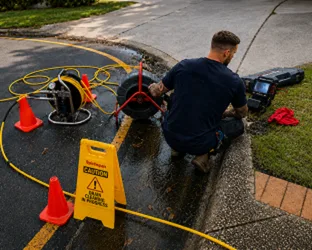
First job on site is stopping the damage: isolate, contain, make safe. Then you get a fixed price for the proper repair before it starts.

Most emergencies are permanently repaired on the spot. If a part has to wait for a supplier, you are left safe, watertight and functioning in the meantime.
Call and describe it. If it can hold, we will tell you, and book you at daytime rates. If it cannot, you will be glad you rang tonight.
Phone is quickest at night. The form works too and reaches the crew covering Westleigh rather than a national call centre.

Leave your details and our local Westleigh team will call you back fast.